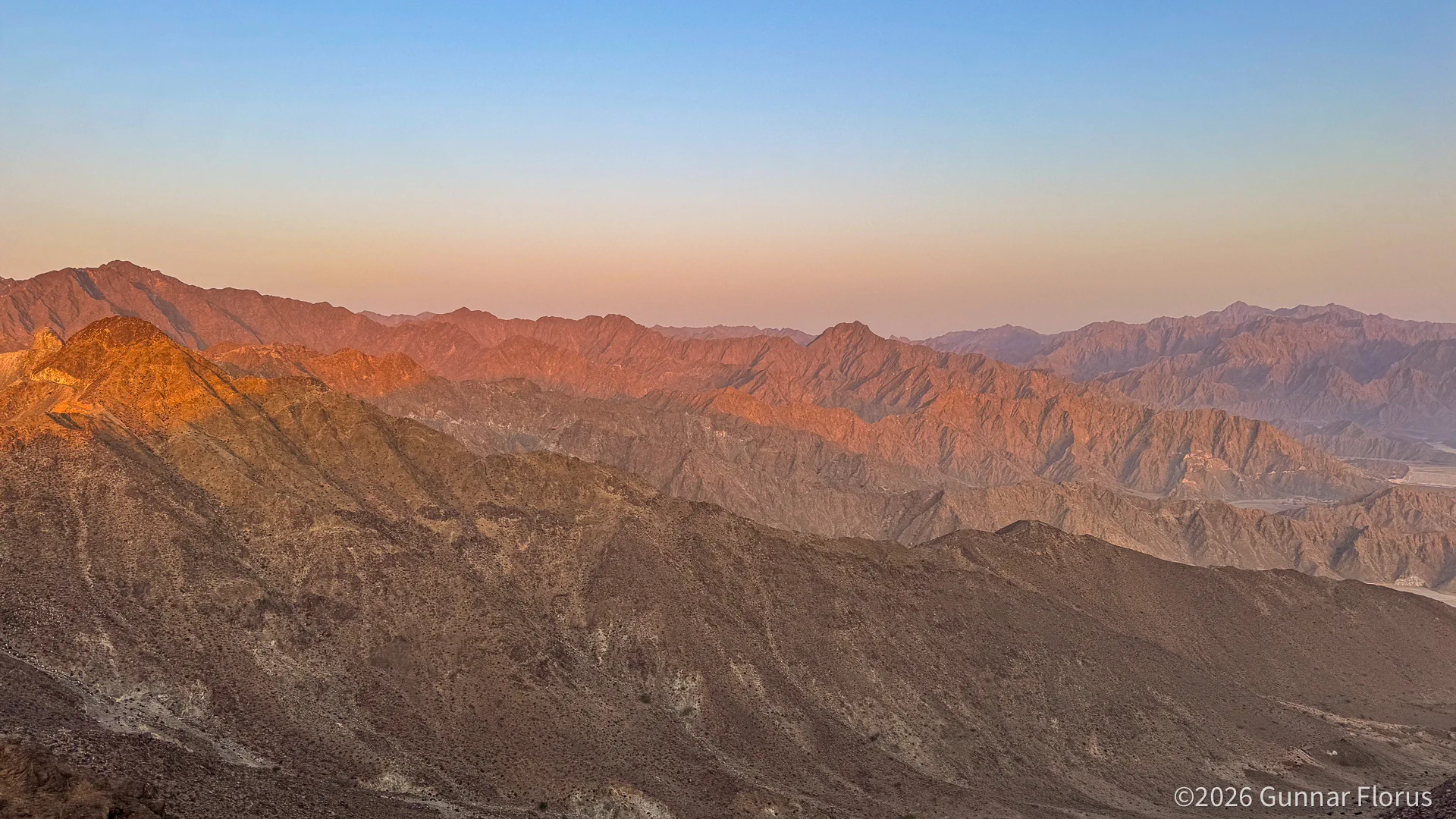
Hiking Jabal al ‘Uwayyin
Early October, I had the pleasure of joining my friend Tim’s hiking group in Dubai for a trek to Jabal al ‘Uwayyin in Khor Fakkan, Sharjah. This was my first hike in the Arabian desert mountains in over twenty years, and naturally, one I was greatly looking forward to. A chance to experience terrain that behaves quite differently from the granite and gneiss in Norway.
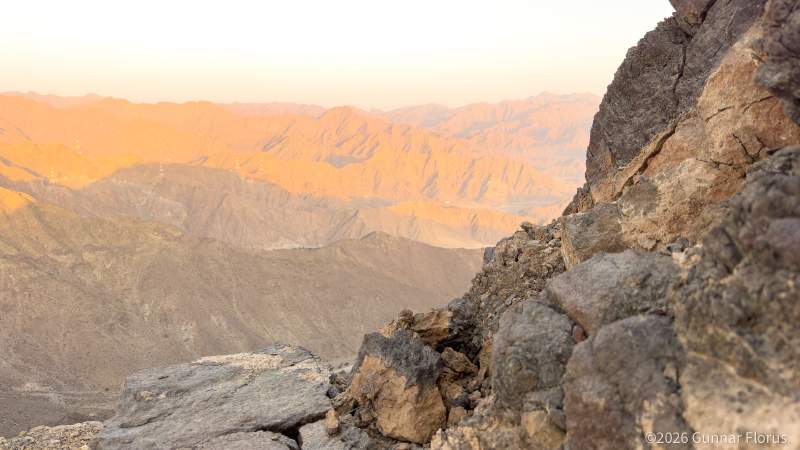
Geography and the peak
Jabal al ‘Uwayyin lies in Khor Fakkan, an exclave of Sharjah wedged between the Gulf of Oman and the Emirate of Fujairah. It is Sharjah’s only access to the eastern coast, a bit over an hour by car from Dubai. The town sits at the foot of the Hajar Mountains, just a few kilometres from the sea. Jabal al ‘Uwayyin rises to around 580 metres above it, the highest peak in the immediate area, with a prominence of just over 230 meters. Without offending my Emirati friends, this barely qualifies as a mountain by Norwegian standards. That does not make it any less beautiful. The area and views are spectacular!
Terrain and Risk
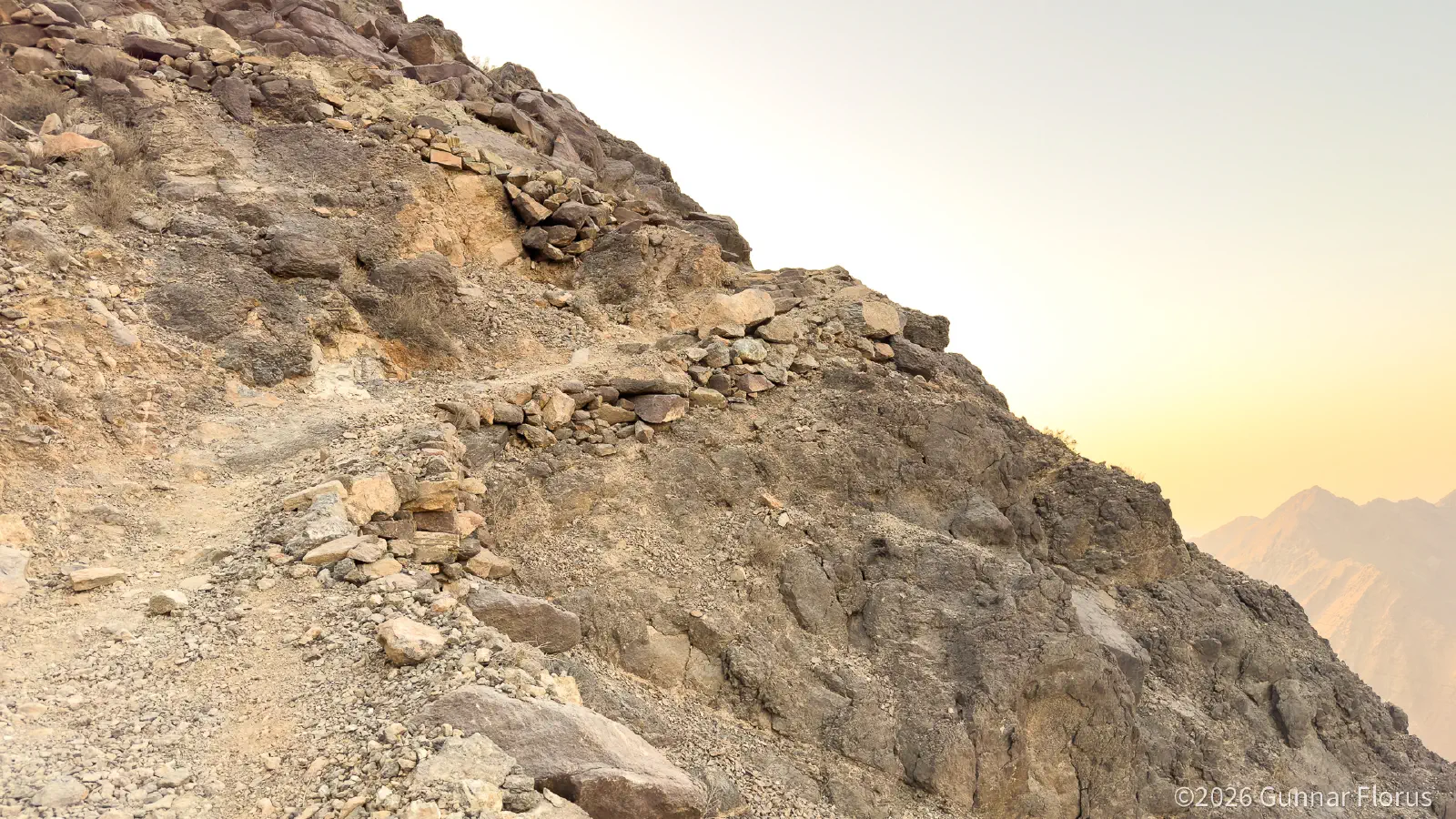
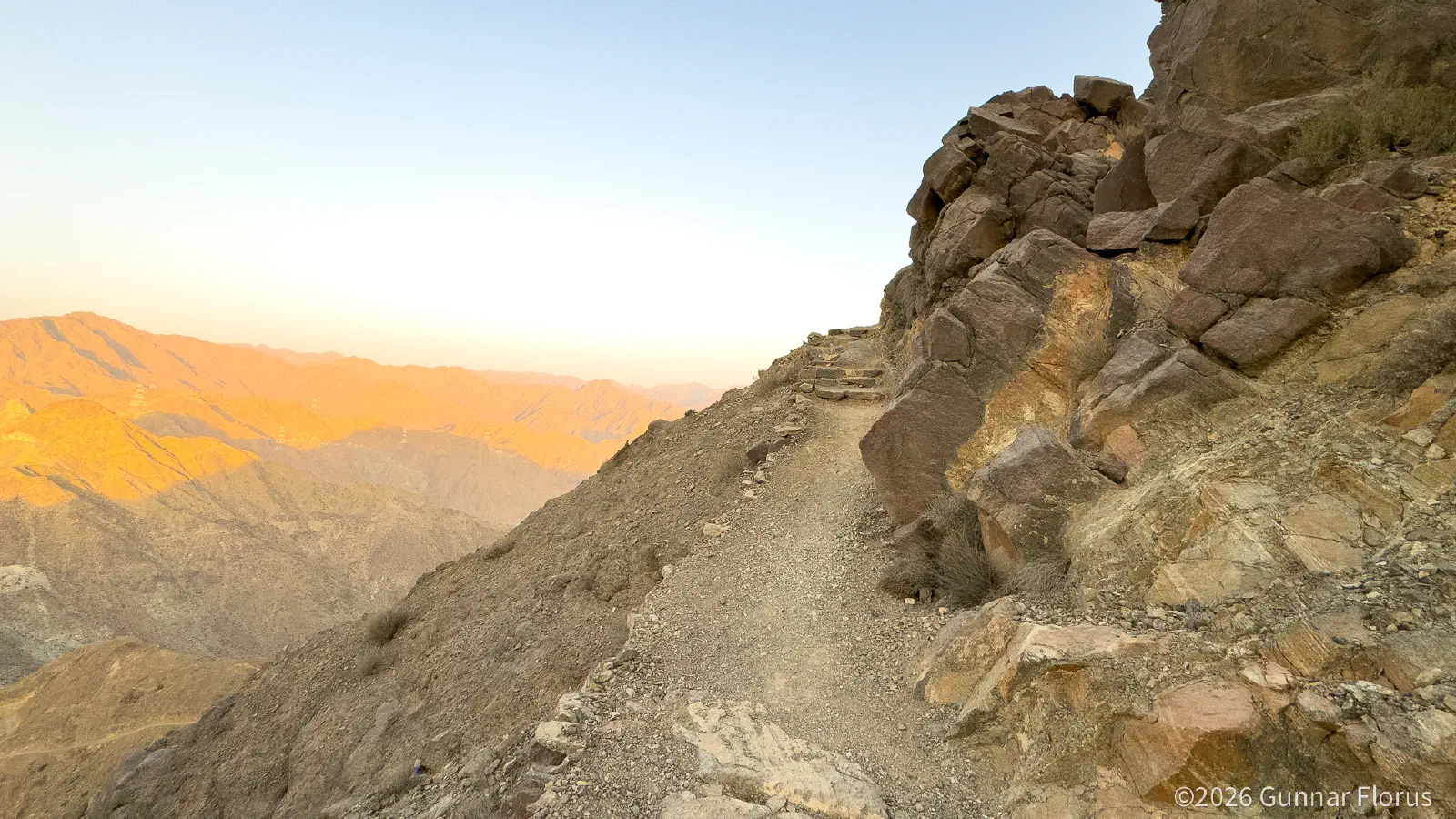
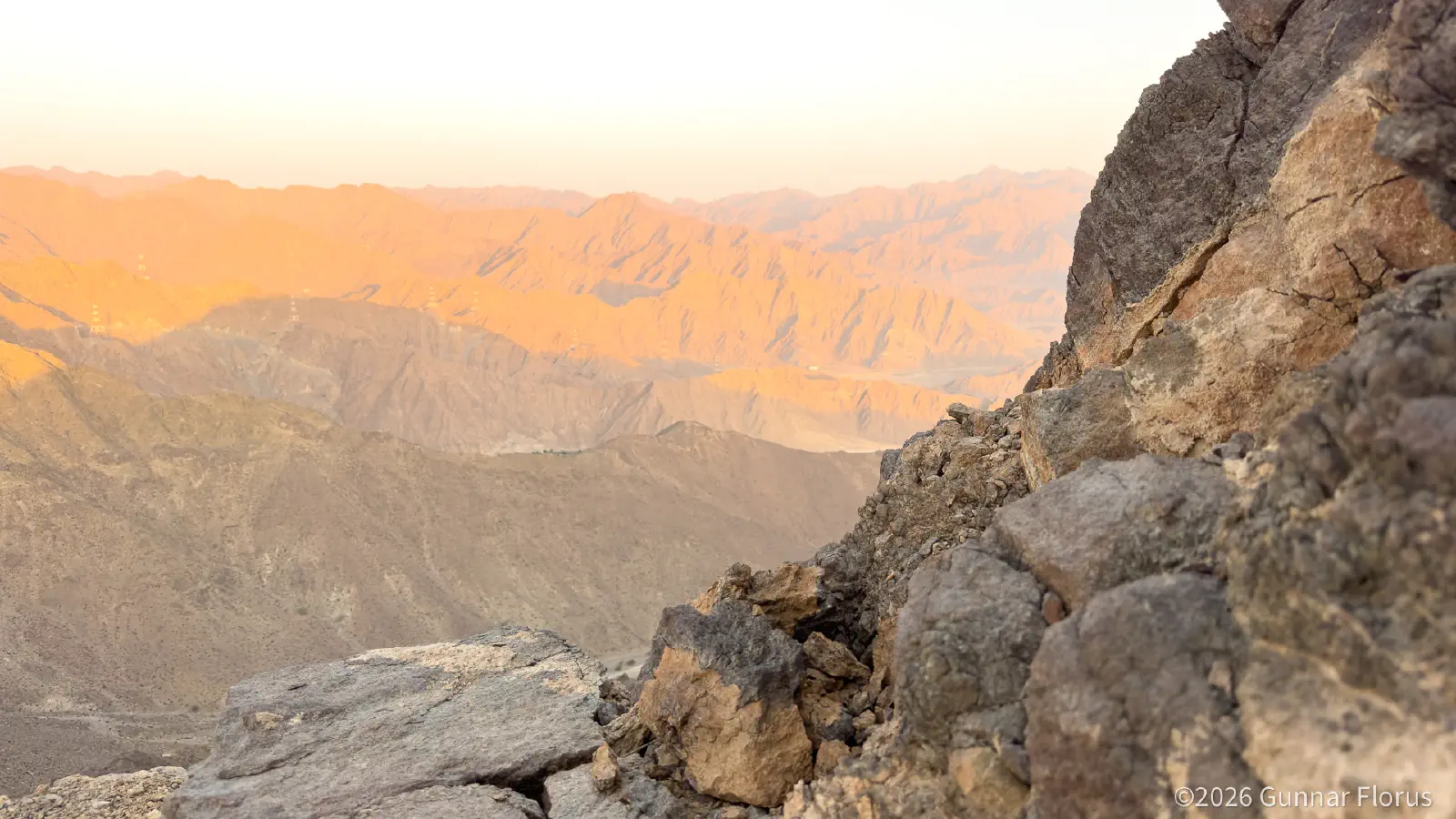
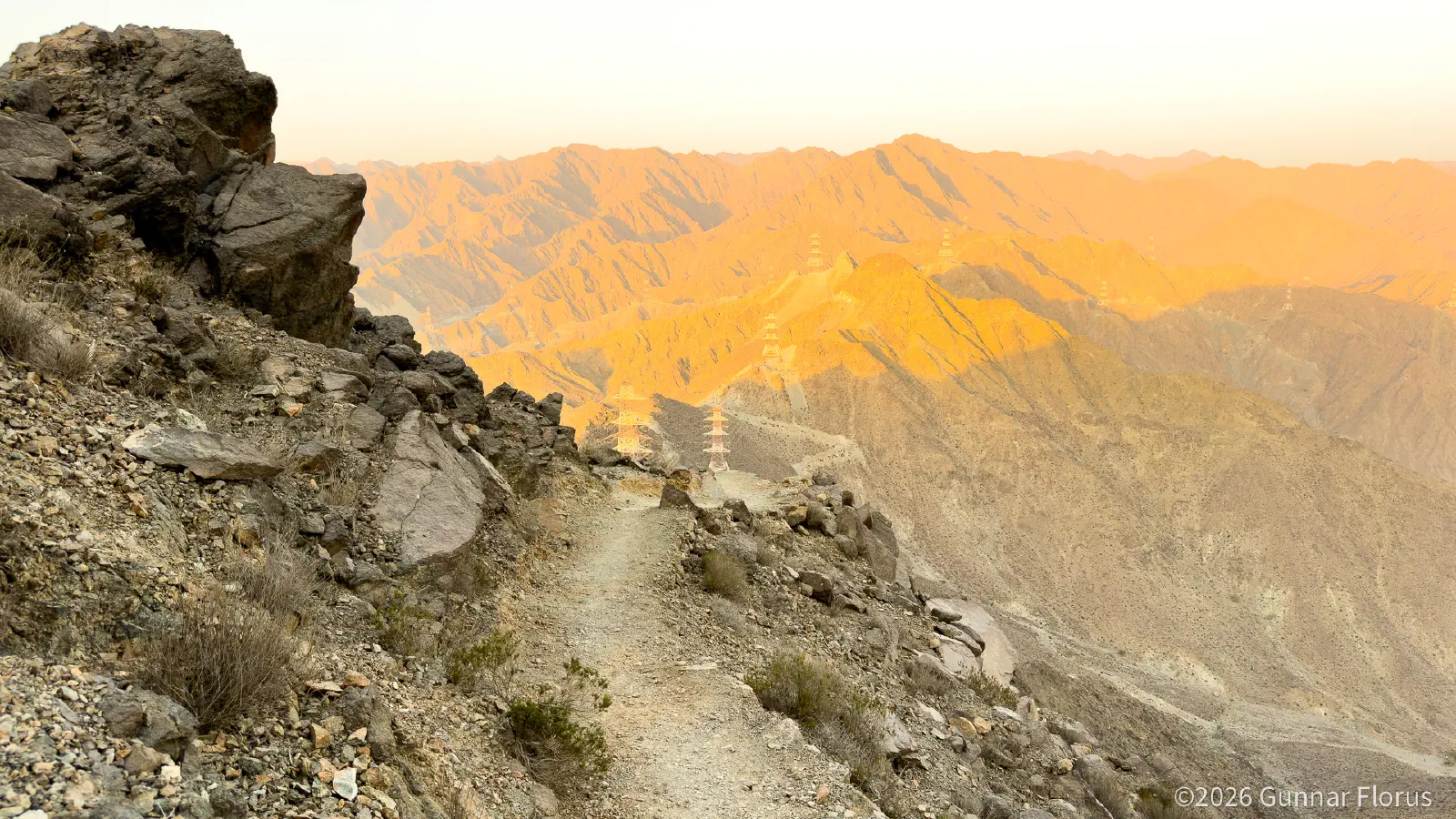
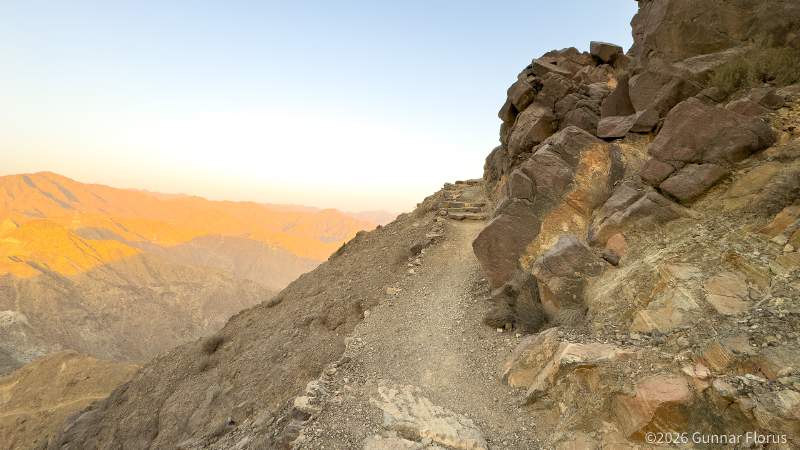
The Hajar Mountains are made of ophiolite, ancient oceanic crust thrust onto land around 70 million years ago. For hikers, the surface behaves differently from the solid gneiss and granite of Norway. Heat and wind have created a brittle outer layer that peels and breaks away underfoot. Expect sharp, unstable rock and loose flakes. In Hurrungane, there is plenty of rocky terrain, but the bedrock stays put. The danger is exposure. A fall means a long way down. Here, the mountain itself is the hazard. You are less likely to fall hundreds of metres, but the ground is more likely to shift beneath you. If you do fall, the landing is much sharper. This is an accessible, well-maintained trail with stone steps along the way. Neither steep nor long, it suits hikers of most abilities.
Planning and getting there
There’s not much planning needed for such a hike, except proper shoes, plenty of water, and ideally some dates or nuts to eat along the way. With an early start, you’d typically eat breakfast upon returning to Dubai. Since I was only visiting Dubai for ten days, I did a tad more planning. I brought my hiking shoes and a few essentials from Norway. Fortunately, I could borrow a small backpack from Tim.
As with proper expeditions, the hiking group also practise alpine starts, so pick up at Palm at 04:00 for a hike start at 05:30 sharp. In the Middle East, this is quite common. You simply want to be back before the extreme heat gets the better of you. Pre-sunrise departure is the norm. This was also clear from this hike. When we started walking at 05:30 my Ruuvi climate sensor read 25.6°C, and only a couple of hours later it was 35°C. In the summer, it’d be a lot worse. There’s ample parking at Al Rafisah Dam, where the trail begins, and the drive from Dubai is pretty straightforward.
The Hike
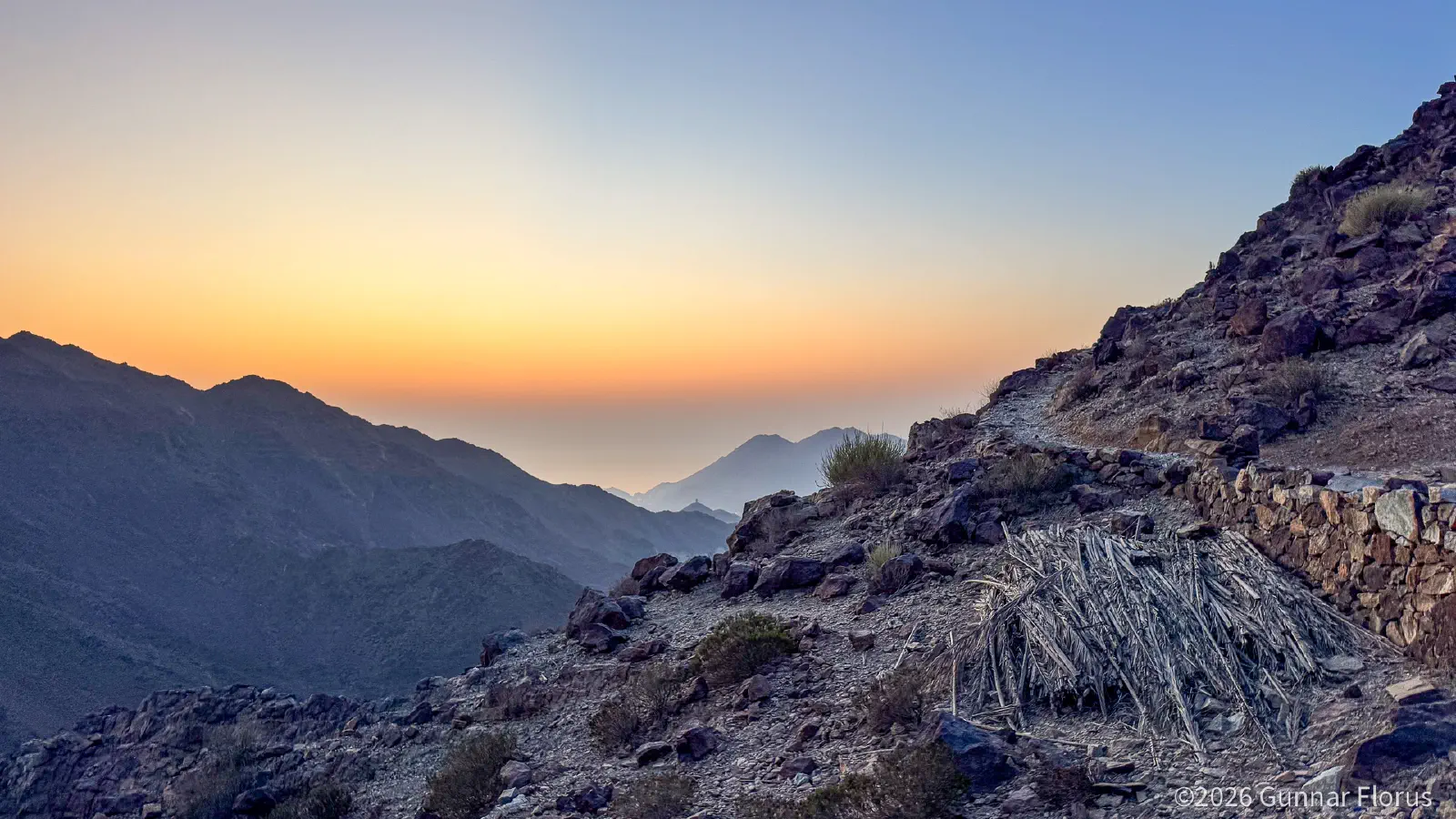
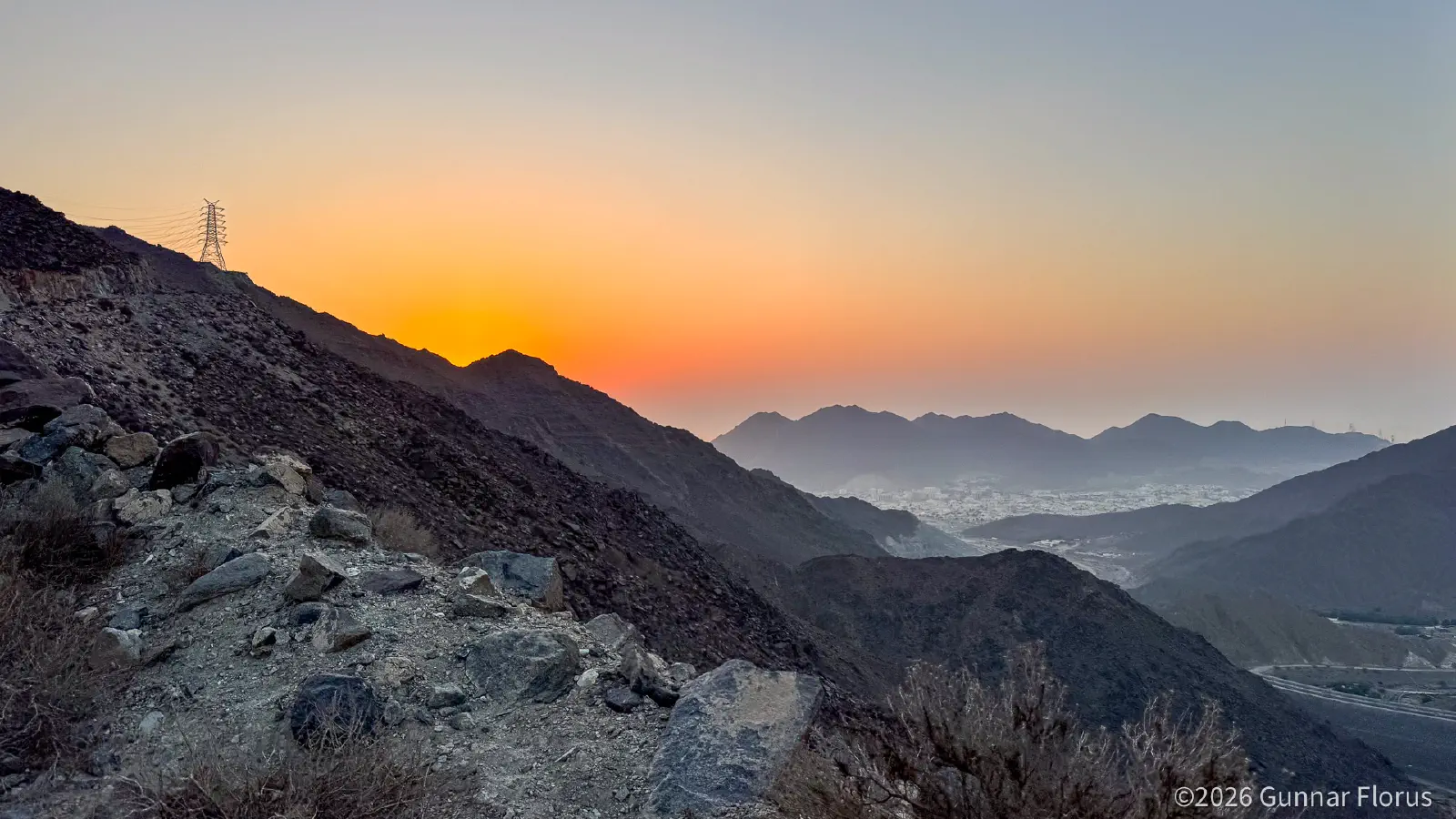
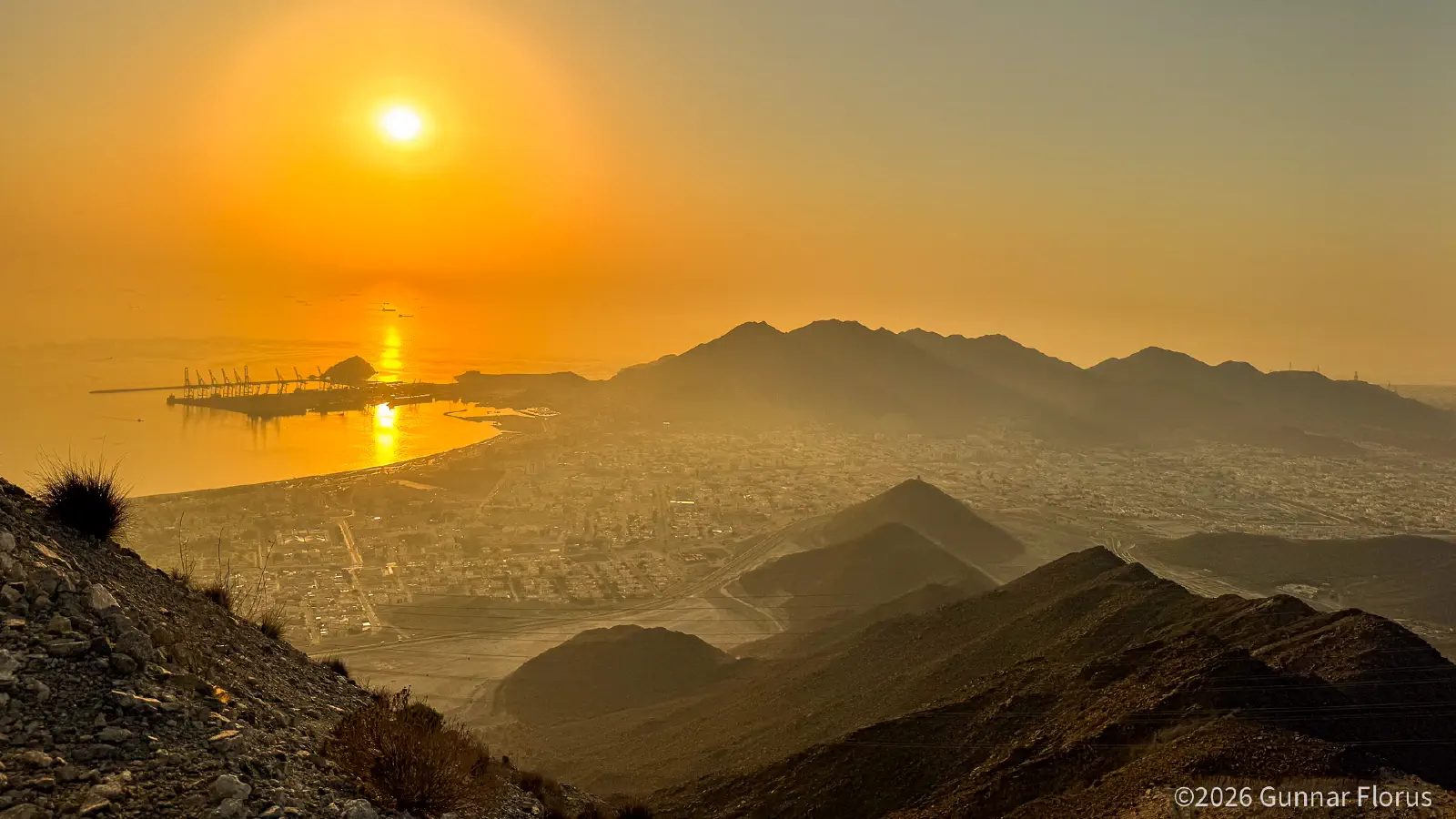
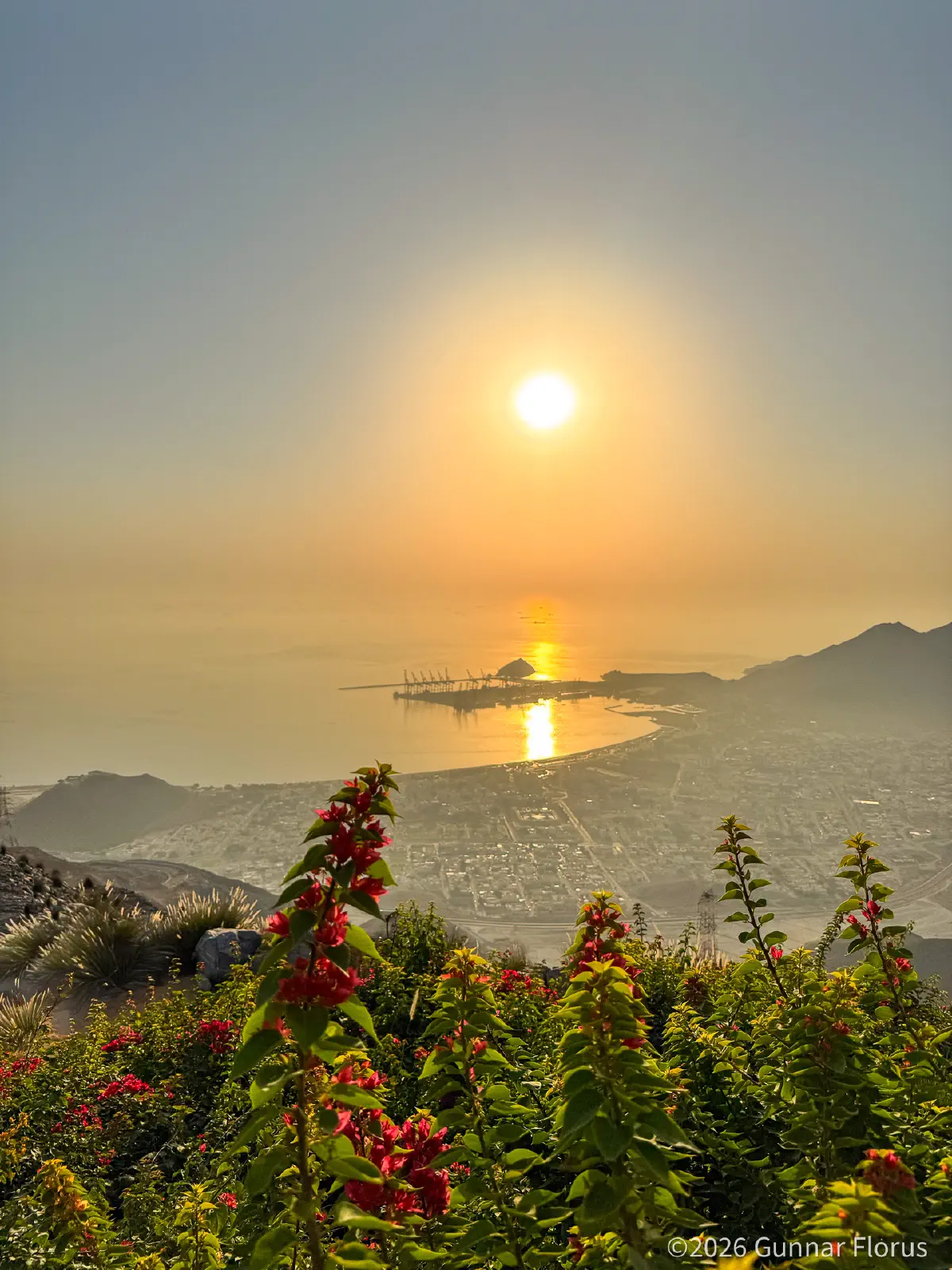
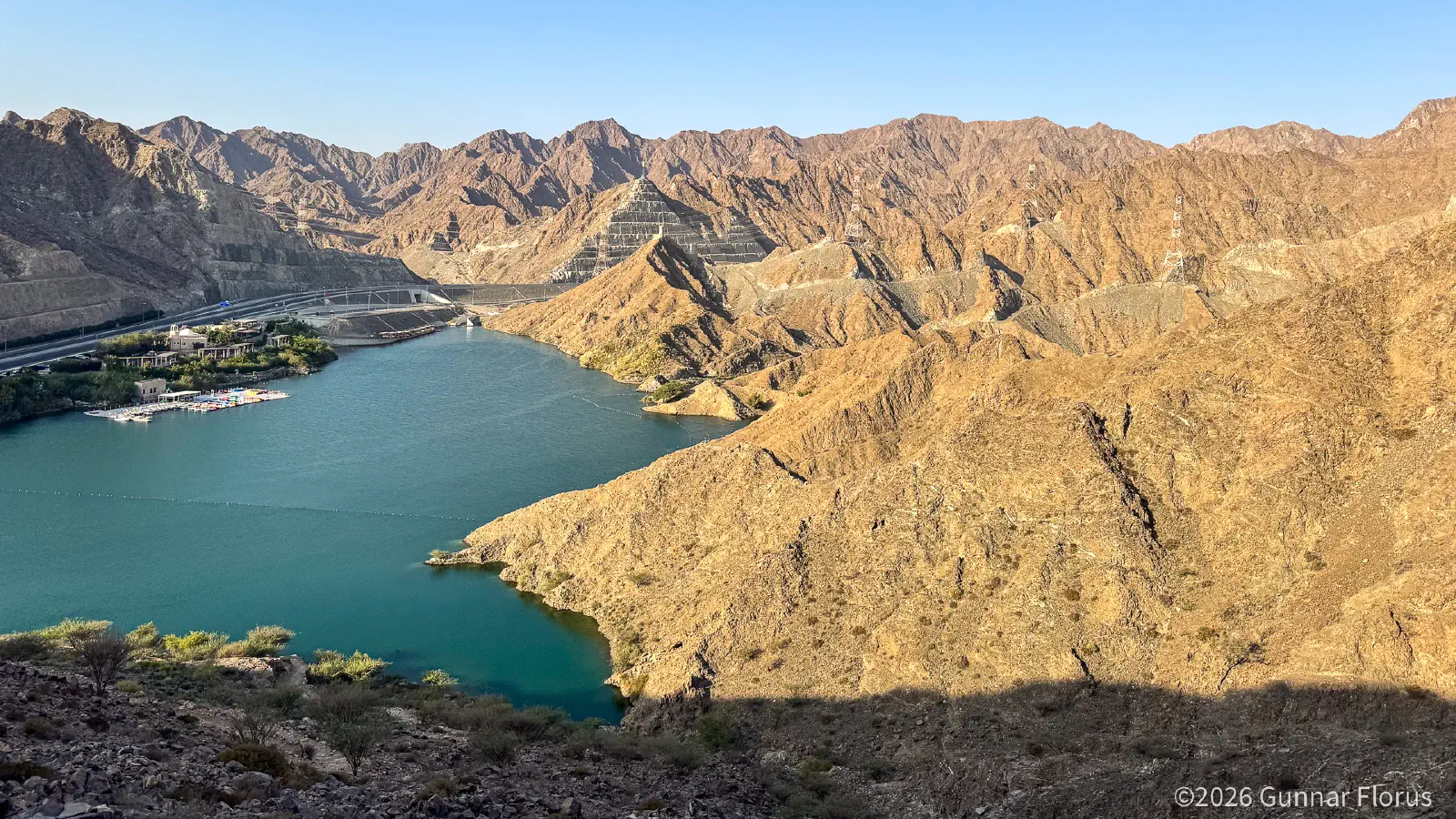
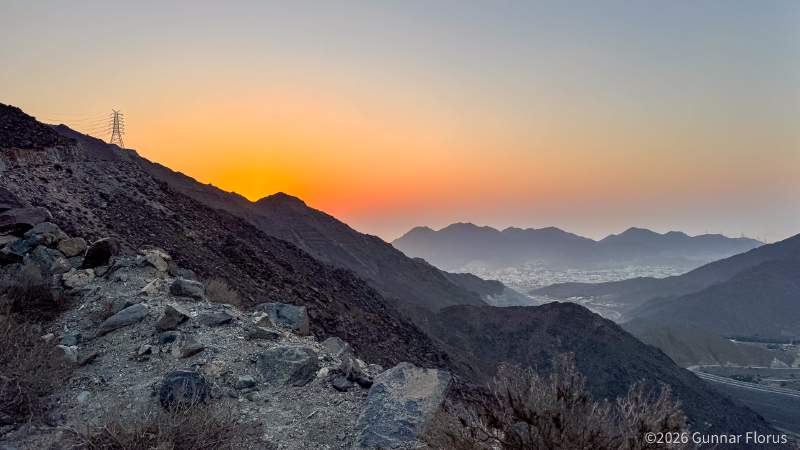
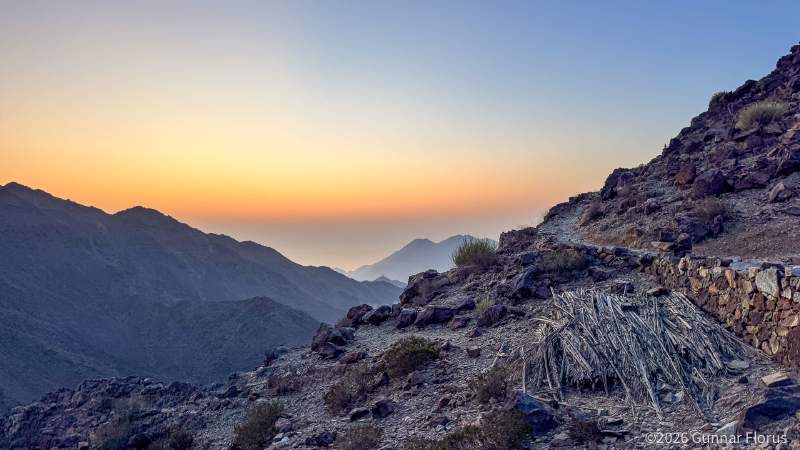
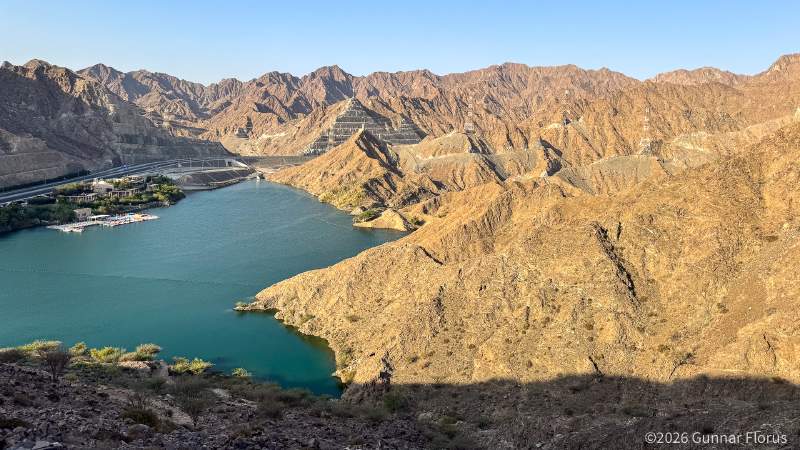
The path is clearly marked and hard to miss. A doable hike for most, regardless of fitness or experience. Total ascent is a mere 500 meters distributed relatively evenly across the roughly 3.5km in each direction. There are some truly spectacular sights along the way, making the effort worthwhile. From the car park, you look down on Al Rafisah Dam and the mountains beyond. Higher up, Khor Fakkan reveals itself against the Arabian Sea.
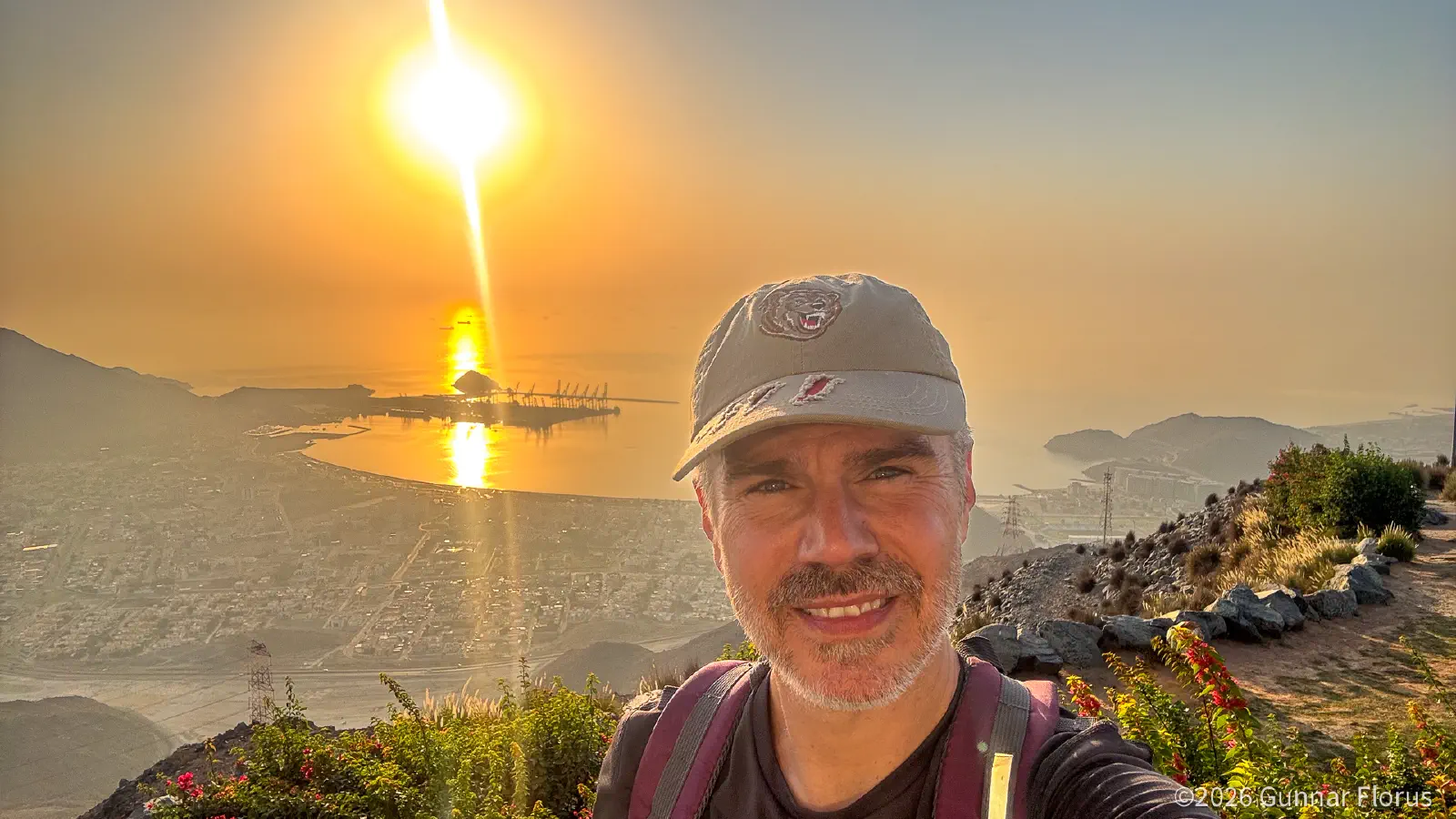
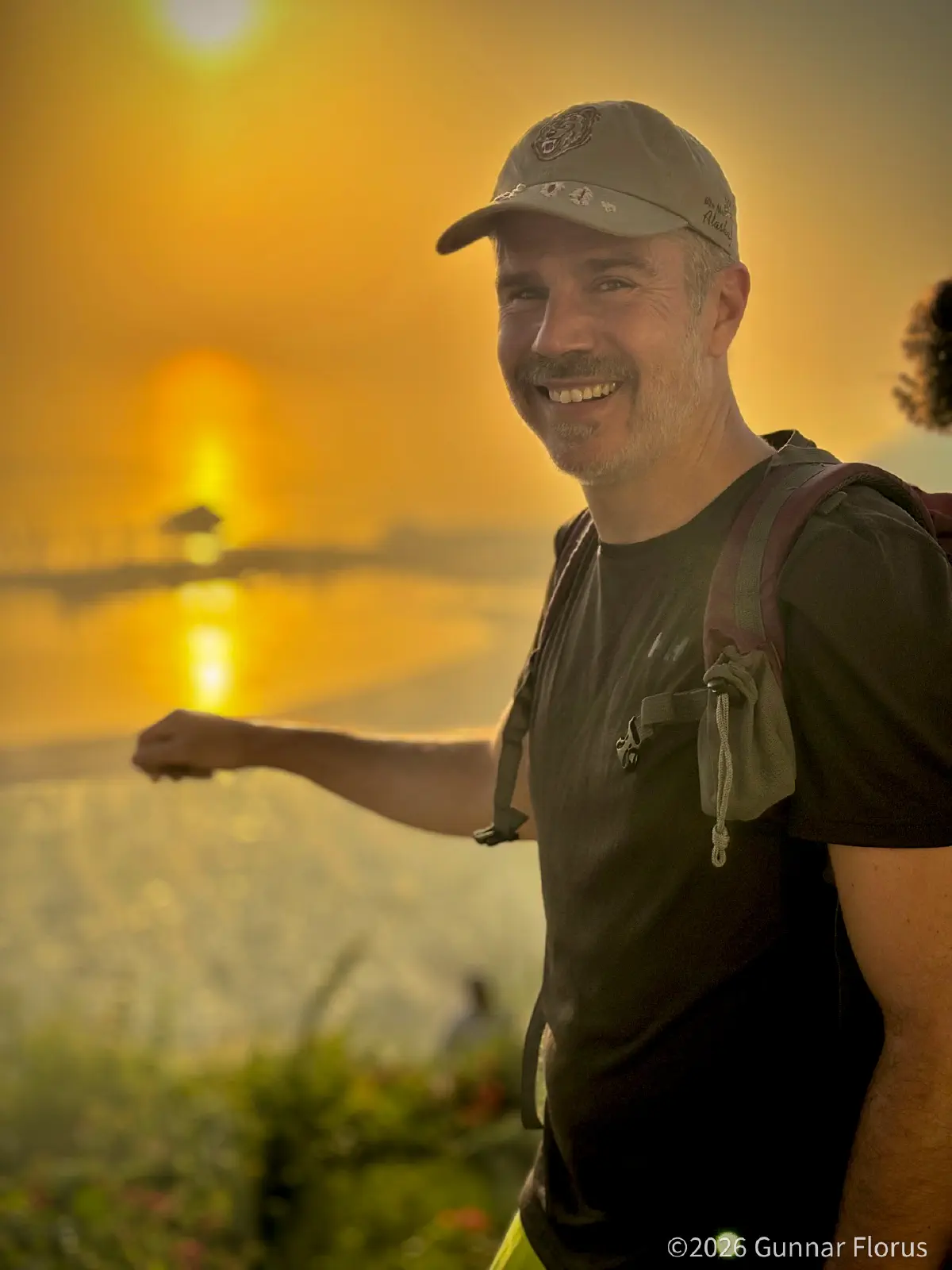
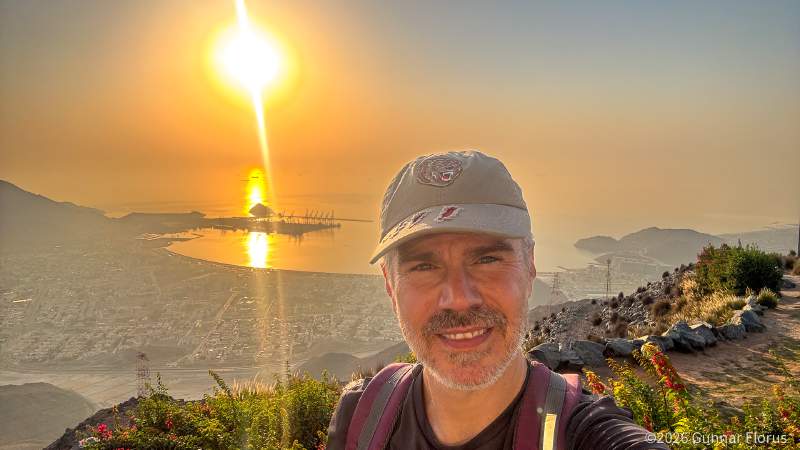
As you approach the top, you get rewarded with some rather spectacular views of the sunrise, as well as an even better view of Khor Fakkan. A beautiful spot for a quick snack, a few pictures, a rehydration break, and then return the same way. My only word of caution would be not to rush the descent, as that is where you truly notice how loose the gravel is. Hiking back in daylight makes it almost seem like a different trail.
If you plan this hike well, you’ll be back in Dubai in time for breakfast with the family, after a truly refreshing start to the day. I cannot believe I didn’t do more of this for the years I lived in Dubai.
Gallery